1.5 Drivers for Effective Actions: Standards, Learning and Principles
| Site: | PSsmile E-learning Course |
| Course: | Part 1. Theoretical and Methodological Background |
| Book: | 1.5 Drivers for Effective Actions: Standards, Learning and Principles |
| Printed by: | Guest user |
| Date: | Tuesday, 25 August 2026, 8:02 AM |
Description
1. Introduction
To set up goals that were adequate for our age group of students, cross culturally adequate for our countries and aligned with the work done internationally about our topic we decided to take into consideration the suggestions from our national and the transnational reports and integrate them two sets of standards:
Learning standards present the goals and benchmarks for student learning in each subject area, they create uniformity and coherence in education by establishing and communicating priorities and providing a common language and structure for instruction within subject areas. They can be considered as an attempt to raise the educational level by providing examples of high-quality standards in different areas of the curriculum (Dusenbury, Zadrazil, Mart, Weissberg, 2011).
2. Driver 1: Standard in SEL and Future Construction
 The
Illinois SEL standard model (Illinois State Board of Education, 2006) and The
Australian Blueprint for Career Development (Ministerial Council for Education,
Early Childhood Development, and Youth Affairs, 2010) are two model that
developed free-standing and comprehensive standards to supporting a positive
development a clear priority.
The
Illinois SEL standard model (Illinois State Board of Education, 2006) and The
Australian Blueprint for Career Development (Ministerial Council for Education,
Early Childhood Development, and Youth Affairs, 2010) are two model that
developed free-standing and comprehensive standards to supporting a positive
development a clear priority.
The guiding principles: The Illinois SEL standard model
It is known that CASEL offers a general model of SEL competences to be implement. The work done until now under the Common Core State Standards initiative across 42 states have not produced a unique SEL standard model. As Dusenbury and colleagues highlight in their examination of the states’ SEL standard (Dusenbury, Calin, Domitrovich, Weissberg, 2015), the Illinois is the first state that started to develop a model, and this is now considered one of the most comprehensive for K-12 (Illinois State Board of Education, 2006).
The Illinois SEL standard model is organized for each school grade, from pre-school to high school, in 3 main goals. For upper elementary each goal includes three to four standards for a total of 10 and two performance descriptors for each standard for a total of 20 (Figure 1).
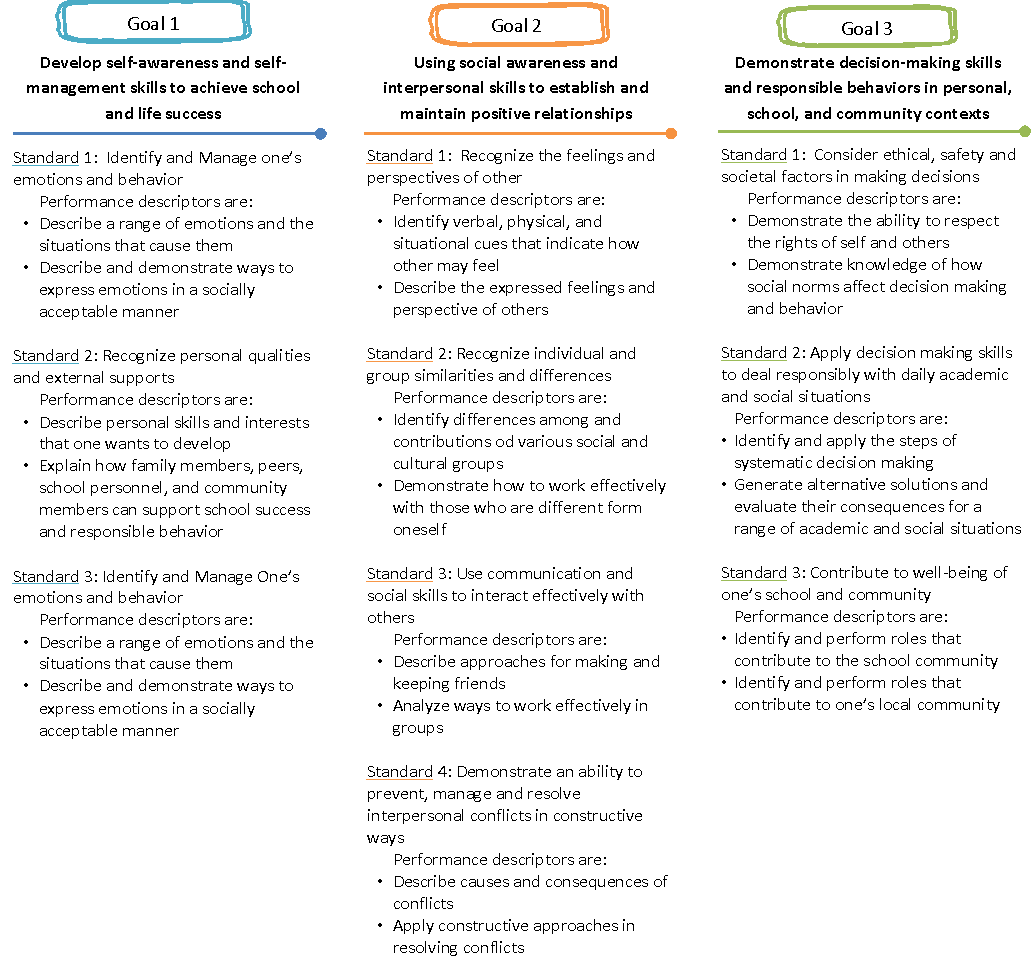
Figure 1. Upper elementary goals, Illinois State Board of Education (2006)
2.1. The guiding principles: Australian Blue Print for Career Development
A second set of standards we decided to refer to comes from the Australian blueprint, a document that includes a set of competences useful for supporting a positive development and readiness for working and adult life.
The competences are organized in three main areas:

Competences appropriate for elementary children are described at Level 1 (Figure 2). Competencies ascribed to Personal Management are particularly appropriate for the PSsmile goals. They, in fact, focus on the development of self-awareness and including understanding attributes and attitudes, building positive interpersonal relationships, understanding growth and change is part of human life.
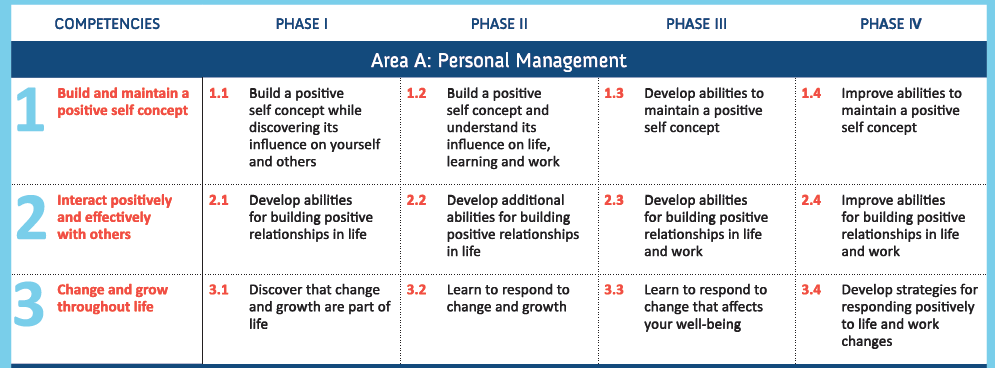
Figure 2. Level 1, Australian Blue Print for Career Development, Ministerial Council for Education (2010)
3. Driver 2: Taking Diversity in the Learning Context
 Universal Design
for Learning (UDL) can be defined as an educational approach or philosophy with
the goal of meeting the needs of diversity in learning environments, by
suggesting flexible instructional materials, techniques, and strategies that
empower educators. By using UDL, educators are proactively designing a
curriculum that responds to the needs of the greatest variety of users from the
start, reducing the need for costly, time-consuming, and after-the-fact changes
and adaptations (Rose & Gravel, 2010).
Universal Design
for Learning (UDL) can be defined as an educational approach or philosophy with
the goal of meeting the needs of diversity in learning environments, by
suggesting flexible instructional materials, techniques, and strategies that
empower educators. By using UDL, educators are proactively designing a
curriculum that responds to the needs of the greatest variety of users from the
start, reducing the need for costly, time-consuming, and after-the-fact changes
and adaptations (Rose & Gravel, 2010).
The guiding principles: Universal Design for Learning
To specify the three main principles, CAST (2018a) published the Universal design for learning (UDL) guidelines version 2.2. The scheme presented below, provides a visual representation of the guidelines, and explores each topic with additional details.
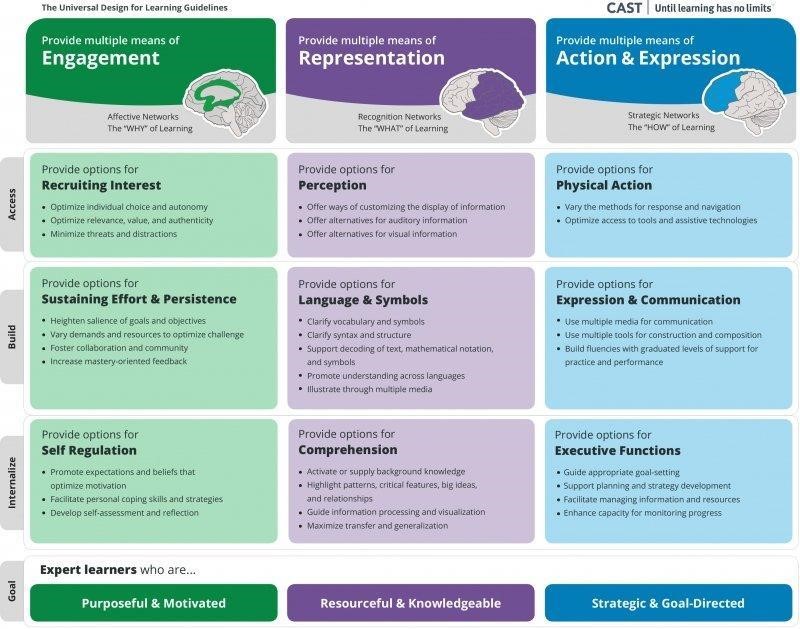
Figure 3: CAST (2018a). Universal design for learning guidelines version 2.2. Wakefield, MA
3.1. The Principles of UDL
In accordance with CAST’s (2018b) definition of the approach, three general principles guide the implementation of UDL:

Providing Multiple Means of Engagement
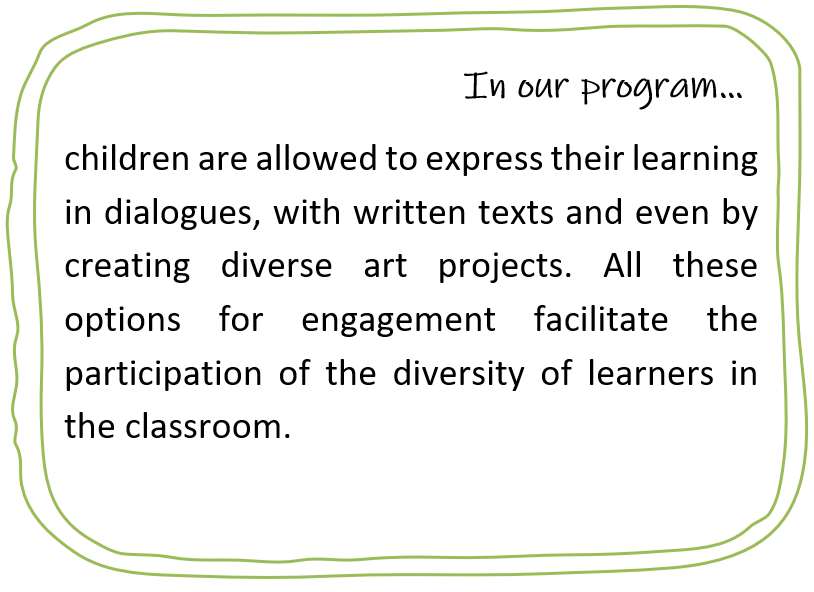
Because learners differ markedly in the ways in which they can be engaged or motivated to learn, it is necessary to provide multiple options for engagement; some students might be attracted to novelty, while others might prefer a predictable routine and structure. Ensuring multiple means of engagement will neurologically activate affective networks that may enhance the outcome of the learning experience.
Providing
Multiple Means of Representation
Students may diverge in the ways they perceive and comprehend the information that is presented; some learners may have with sensory disabilities or preferences (e.g., blindness or deafness), others may present learning disabilities (e.g., dyslexia), language or cultural differences. No type of representation is optimal for a particular kind of content and there is no ideal means of representation that suits all the students or all types of learning. It is essential to provide options for the representation of content, as this will neurologically activate recognition networks that will take the learning experience further
Providing Multiple Means of Action Expression
Most likely, different students in the classroom will differ in the ways they can navigate a learning environment and experience and express what they know. For example, some individuals may struggle with expressing themselves by speaking (e.g., someone with a motor speech problem), while others may have difficulty with written expression (e.g., a person with a language disorder). There is not a means of expression that will be optimal for all the learners. Providing diverse options for action and expression is essential and will activate neurological strategic networks with positive impact on learning.
When reflecting about the three principles of the UDL approach, it may be interesting to think of those as a GPS (meaning, the car’s Global Positioning System) that supports the educator in understanding where the learner is and how to flexibly conduct him/her towards the intended destination. Rose and Gravel (2010) use this analogy and compare the learning process to a trip; at the end of the trip, the GPS narrator will announce: “You’ve arrived.” Perhaps you did not take exactly the route you were expecting … Perhaps you had to wander around for a while until you found the right way … But in the end, you have reached the destination you intended, with just the right amount of support.
4. Driver 3: Strategies for Effective Learning
 When planning a
learning experience, using the UDL guidelines “from the start” will be useful
to address the needs of diverse learners more effectively in the group; no
group is homogenous or has one optimal learning method, therefore it is
unrealistic to plan the learning process thinking of an average student or
having a norm as reference.
When planning a
learning experience, using the UDL guidelines “from the start” will be useful
to address the needs of diverse learners more effectively in the group; no
group is homogenous or has one optimal learning method, therefore it is
unrealistic to plan the learning process thinking of an average student or
having a norm as reference.
The guiding principles
While implementing the learning activities, thinking more specifically about the strategies that will be used may be important. Weinstein and Sumeracki (2018) suggest six strategies for effective learning, supported by the Cognitive Psychology.
All the strategies below can be considered highly relevant because they have supporting evidence from cognitive psychology and from the science of learning, moreover they have converging evidence from controlled laboratory studies, classroom studies and practical use of the strategies in education (Pomerance, Greenberg & Walsh, 2016).
4.1. The Principles in action: Part 1
As defined by the authors from The Learning Scientists Project (Weinstein & Sumeracki, 2018), these strategies are:
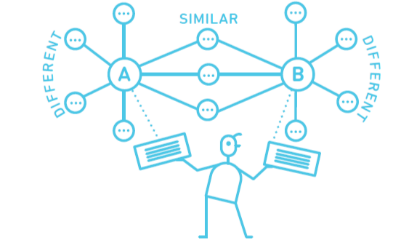
Describing and explaining ideas with detail, establishing relationships between different ideas, and connecting them to own experiences and memories.
While using the PSsmile activities you can …
… describe the skills and topics that are being explored thoroughly, making connection to specific situations from the student’s or group’s experiences.
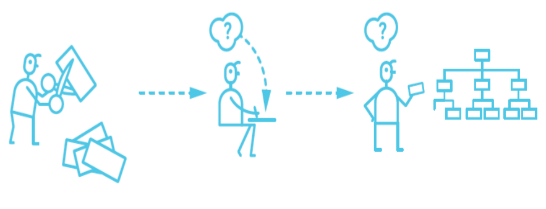
Making the effort of bringing the ideas and content learnt to mind, evoking specific information and details, and checking accuracy afterwards.
While using the PSsmile activities you can …
… use the suggested flash cards with the group, trying to recall detailed information gained from a previous activity and checking the accuracy of your notes afterwards.
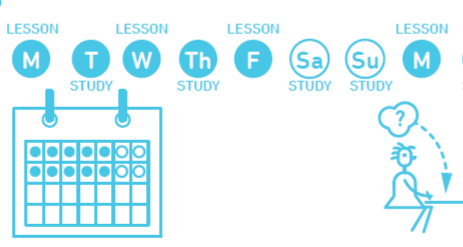
Planning the work spread along the time; it is better to work on a topic for five hours throughout a week, than to study it for five hours in the same day.
While using the PSsmile activities you can …
… spread the exploration of a specific content (e.g., identifying own emotions) in time, instead of intensively going through the whole content in one long session.
4.2. The Principles in action: Part 2
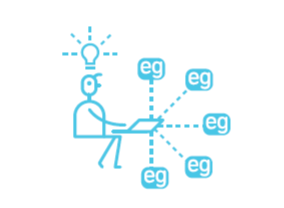
Using specific and concrete examples to explain the more abstract and complex ideas, making connections between ideas and examples, and asking for the learners to share their own examples.
While using the PSsmile activities you can …
… Use the examples suggested in the manual, ask the students to think of examples, look for more examples on the internet …
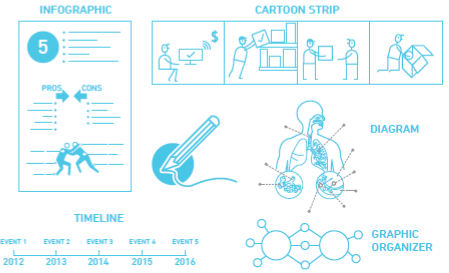
Combining words (verbal information) with visuals, such as infographics, diagrams, graphic organizers, or timelines. It can also be done in the reverse way; look at a visual and explain the content in own words.
While using the PSsmile activities you can …
… draw a facial expression to facilitate learning the names of different emotions.
Switching between topics while you explore contents, not studying the same idea for too long and going back over the ideas again to consolidate the learning and to make connections.
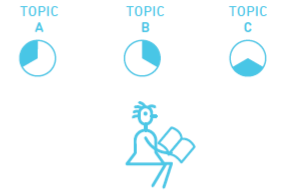
While using the PSsmile activities you can …
… use activities from different domains when you implement the program, switching between topics.

4.3. Our Lenses
 Recent approaches show
a comprehensive vision of school and life success that encompasses multiple
domains of students’ development, including social and emotional development
(Pomerance, Greenberg & Walsh, 2016), and how goals and choices can change
when we take into consideration different dimensions.
Recent approaches show
a comprehensive vision of school and life success that encompasses multiple
domains of students’ development, including social and emotional development
(Pomerance, Greenberg & Walsh, 2016), and how goals and choices can change
when we take into consideration different dimensions.
 The
importance of a future oriented and integrated approach is proposed in the Standard models presented,
underlining the relevance of looking at present and future objectives and
undertaking a positive approach, emphasizing
the role of decision making in the domains and in all proposed activities.
The
importance of a future oriented and integrated approach is proposed in the Standard models presented,
underlining the relevance of looking at present and future objectives and
undertaking a positive approach, emphasizing
the role of decision making in the domains and in all proposed activities.
Schools can be seen an ideal place to provide
everyone learning activities
designed to help them achieve their best leadership chances, happy, healthy,
and independent lives, reach their unique career potential. (Patton &
McMahon, 2015).
Standards
are one element of a
coordinated approach to effective education that includes: clear and
appropriate educational goals and benchmarks,
evidence-based curricula, and instruction to achieve those goals and
professional development for teachers to support high-quality instruction
(Dusenbury, Zadrazil, Mart, Weissberg, 2011).
What is interesting and relevant to bring in PSsmile, is that each competence is described in terms of: knowledge to acquire, skills to apply in numerous situations, personalization and reflection as well as act and practice new knowledge and skills.