1.4 Building a Positive Educational Community
| Site: | PSsmile E-learning Course |
| Course: | Part 1. Theoretical and Methodological Background |
| Book: | 1.4 Building a Positive Educational Community |
| Printed by: | Guest user |
| Date: | Tuesday, 25 August 2026, 8:06 AM |
1. Introduction
Children learn in many different settings, including their families, schools, and communities, with each context playing an important role throughout childhood and adolescence.
The aim of the psSMILE project is to contribute to building emotionally stable, inclusive, and healthy communities where significant adults, namely parents and teachers, take care of their own socio-emotional functioning and support its development in children.
2. The Roots
 Research shows that children have considerable potential to develop
social and emotional skills throughout life by their environment (Srivastava et
al., 2003). Most proximal environment as family, teachers and schools have
numerous opportunities to provide learning environments where skills can be
developed, enhanced, and reinforced through practice and daily experiences.
Parents shape the child’s first values, familiarize them with societal rules
and norms of behavior, communication skills, and the world of feelings.
Research shows that children have considerable potential to develop
social and emotional skills throughout life by their environment (Srivastava et
al., 2003). Most proximal environment as family, teachers and schools have
numerous opportunities to provide learning environments where skills can be
developed, enhanced, and reinforced through practice and daily experiences.
Parents shape the child’s first values, familiarize them with societal rules
and norms of behavior, communication skills, and the world of feelings.
As Goleman argues (Goleman, 1996) family life is the first gym where children play and develop social-emotional skills. He asserts that here children learn how to know their feelings and what to do with them, as well as how other people will react to others’ feelings and choices people make in expressing their feelings. Children come to school with different experiences and different levels of social and emotional skills development. Therefore, for some children it is easier to adapt to the new environment, to meet different requirements, to communicate with peers and to learn, and for other children it is more difficult. Thus, to enhance the development of social and emotional skills, parents should be involved in the educational process.
Researchers have been
revealing the importance of parental involvement in children’s learning,
children showing relevant forms of social behavior (i.e., prosocial behavior
refrain from forms of disruptive and antisocial behavior) are positively
related to acceptance by peers, motivation to achievement and academic success
(Wentzel, 2009) and the lack of these skills often hinders the educational
process of students (Sheridan, Kim, Beretvas & Park, 2019)
We can teach the student how to manage anger, how to listen to another person, or how to express what you do not like. However, if the child does not have someone to share these skills with when he or she returns home and no one will support or encourage him or her, he or she will use old and not necessarily appropriate methods.
3. A Guiding Model
 Foundations to
family-school-parent connections supporting children's learning and development
can be found in Bronfenbrenner ecological systems theory (Bronfenbrenner,
1979) and later developments (Sheridan, Smith, Moorman, Beretvas & Park, 2019).
Foundations to
family-school-parent connections supporting children's learning and development
can be found in Bronfenbrenner ecological systems theory (Bronfenbrenner,
1979) and later developments (Sheridan, Smith, Moorman, Beretvas & Park, 2019).
Children's learning and development are influenced by events occurring within and across multiple systems and the interactions between them.
Microsystems such as family and classroom are most proximal to the child and have an immediate impact on development. The interactions, experience, and relationships between microsystems, such as communication between parents and teachers, represent the mesosystem. Influence on the child's development is also indirectly coming from the exosystem (e.g., events in the parents' workplace) and from the macrosystem (cultural norms and values) and from the effect of the chronosystem (interactions and influences change over time). Direct influences (the home and school microsystems) and relational influences (the home-school mesosystem) can be seen as the basis of family-school interventions (Sheridan et al., 2019).
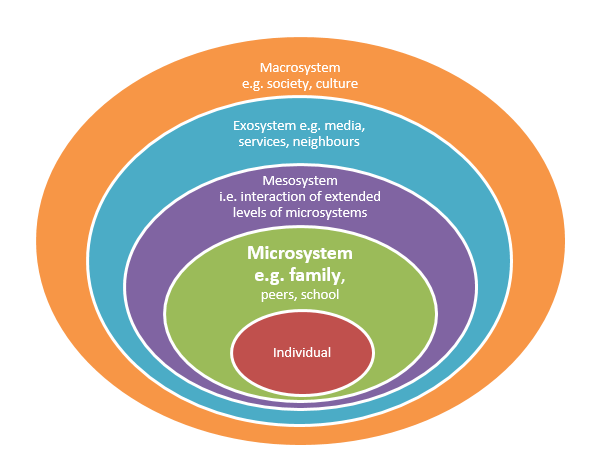
Figure 1. Bronfenbrenner ecological model (1979)
3.1. Participation as a key concept for a positive educational community
Within the systems mentioned, the family-school partnership aims at promoting the participation of significant caregivers (e.g., parents, grandparents, stepparents, foster parents) in the educational process (Fishel & Ramirez, 2005). Participation can be characterized by the quality of the learning experience from the learner perspective, and therefore it must incorporate the views of the learners themselves (Ainscow, 2016). In addition, school-level process factors contribute facilitating or hindering a sense of belonging and a sense of autonomy to the learner, as well as a sense of a meaningful participation with peers of the same age.
For a full participation of all to the educational process, the involvement of both the meso (family, school, or classroom) and micro (individual learner) levels should be then considered (Ramberg & Watkins, 2020). Evidence exists, in fact, that positive parenting roles and practices support children's efforts in school and lead to academic achievement and social skills improvement (Sheridan, Witte, Holmes, Wu, Bhatia, Angell, 2017a; Smith, Reinke, Herman & Huang, 2019). An effective school-family partnership has been shown to be responsible for supporting and improving children's learning opportunities and experiences: when the development of these interactions is regularly part of the education process, benefits for children, teachers and families are achieved through positive changes in social skills and adaptive children’s behaviors, through the use of effective strategies for teachers and through the positive and effective practices of parents to help their child succeed in school (Sheridan et al. 219).
Participation for all is also a core concept of inclusive education, that is the “struggle to ensure access to meaningful and equitable education”. Besides contextualizing inclusive education within local systems and variable in terms of socio-historical context and school organization (Slee & Allan, 2001; Waitoller & Kozleski, 2013), recent studies underline other key factors responsible for creating an inclusive environment. Attitudes and beliefs of teachers, for instance, play a key role (Oluremi, 2015). It is worth mentioning here, in particular, their self-efficacy and agency that is their ability to be effective in impacting and changing the contexts where they work (Ferrari & Sgaramella, 2020).
4. Current and Future Directions
 Working for assuring
education to all, promoting participation, and fostering the inclusiveness of
life contexts align with the recommendation of the Agenda 2030 for Sustainable
Development.
Working for assuring
education to all, promoting participation, and fostering the inclusiveness of
life contexts align with the recommendation of the Agenda 2030 for Sustainable
Development.
Published in 2015 by the United Nations General Assembly it includes 17 global and interlinked goals (SDGs), to be a "model for achieving a better and more sustainable future for all". Goal 4 of the Education SDG promotes education for sustainable development (ESD).
SDG 4: Ensure inclusive and equitable quality education and promote lifelong learning opportunities for all Targets are:
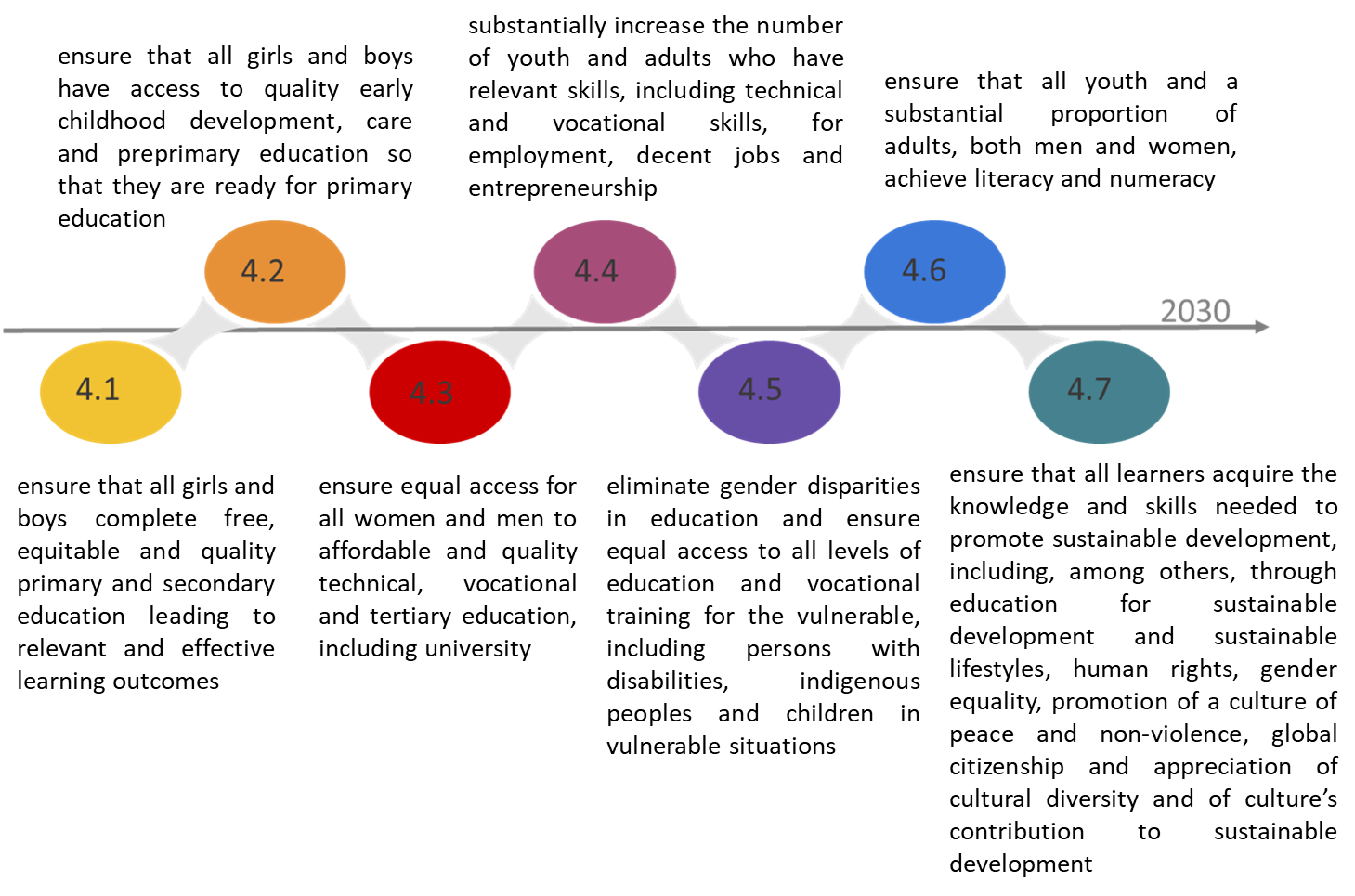
Figure 2: Sustainable development goals (SDGs) 2030, Colglazier, (2015)
Education plays, then a key role in addressing the development challenges promoted by the 2030 Agenda. This is particularly relevant for the most marginalized individuals when it comes to the right to quality basic education (Educate A Child October, EAC, 2016) .

Fostering social and emotional skills is also connected with equality for all. Equality in education means that personal or social circumstances (gender, ethnic origin, or family background) but also lack of opportunities for social and emotional skills development, should not obstacle the achievement of educational potential.
These skills, in fact, have the potential to compensate for the effects of socioeconomic disparities on academic performance (Steinmayr, Dinger & Spinath, 2012; Suárez-Álvarez, Fernández-Alonso & Muñiz, 2014; Tucker-Drob & Harden, 2012). By ensuring that all students, besides cognitive skills, develop socio-emotional skills, schools and education systems can be at the forefront of creating more inclusive communities and fair societies.

Implementing the concept of inclusion in schools suggests that schools can learn and engage in collaborative problem solving, develop the capacity within the organization to support and apply generic problem-solving strategies. Schools, under this lens, are dynamic and fluid organizations with a common goal of sustaining each other by bringing people together to share experiences and find common ground as a basis for action (Shaw, 2016). The idea of working together to achieve common goals, building a collective agency that has greater strength in claiming the right to participation of marginalized people (Burns et al. 2015) and in which there is a greater sense of belonging.
5. Our Lenses
 When
we promote social and emotional skills, we build skills that can offset the
effects of differences, promote participation and social inclusion. Social and Emotional Capacity Building contributes to Social Inclusion, to the
process that develops "along the domain of participation, connection and
citizenship (Cordier, 2017).
When
we promote social and emotional skills, we build skills that can offset the
effects of differences, promote participation and social inclusion. Social and Emotional Capacity Building contributes to Social Inclusion, to the
process that develops "along the domain of participation, connection and
citizenship (Cordier, 2017).
 Social
and Emotional Capacity Building contributes to Social Inclusion by
supporting:
Social
and Emotional Capacity Building contributes to Social Inclusion by
supporting:
o Participation conceived both as economic participation (employment, development of autonomous enterprises, education, and training) and social and spiritual participation.
o Connection, that is the sense of belonging and relationships within social groups, feelings of attachment to family, friends, neighbors, and the wider community.
o Citizenship, when inclusion extends to community engagement and access to community services.
Teachers' agency supports effective
participation
Within this scenario leads them cultivate student learning and improve education (student-centered strategies, differentiation, flexible grouping, curricular supports); collaborate with school personnel; foster family-school-community connections. These are concrete actions that represent a significant departure point from which teachers can use their agency to support effective participation for all students (Miller, Wilt, Allcock, Kurth, Morningstar & Ruppar, 2020).