1.1 Positive Youth Development
| Site: | PSsmile E-learning Course |
| Course: | Part 1. Theoretical and Methodological Background |
| Book: | 1.1 Positive Youth Development |
| Printed by: | Guest user |
| Date: | Tuesday, 25 August 2026, 8:15 AM |
Table of contents
- 1. Introduction
- 2. {mlang en}The Roots {mlang} {mlang It} Le Radici {mlang} {mlang lt}insert text here{mlang} {mlang pt}insert text here{mlang} {mlang el}insert text here{mlang} {mlang bg}insert text here{mlang}
- 3. A Guiding Model: The Practice of Positive Youth Development
- 4. Research Studies and Actions
- 5. Our lenses: progressing in building a positive future
1. Introduction
Traditionally approaches to development and related research have focused for years on problems that children and young people may encounter while growing up, such as learning difficulties, antisocial conducts, affective disorders. The interest for positive resources and strengths is more recent.
Known as Positive Youth Development (PYD), this perspective introduces a more affirmative and welcome vision of young people (Damon, 2004) and of their development.
Accordingly, while acknowledging the existence of adversities and developmental challenges that may affect children in various ways, it resists conceiving of the developmental process mainly as an effort to overcome deficits and risk. In adopting this perspective, we begin with a vision of a fully able child eager to explore the world, gain competence, and acquire the capacity to contribute importantly to the world.
2. {mlang en}The Roots {mlang} {mlang It} Le Radici {mlang} {mlang lt}insert text here{mlang} {mlang pt}insert text here{mlang} {mlang el}insert text here{mlang} {mlang bg}insert text here{mlang}
 The emergence of what
has come to be generally termed as PYD has many roots: the documented potential for systematic change, for plasticity, in
the course of development shown by research in comparative psychology and
evolutionary biology (e.g., Gottlieb, 1997);
the possibility of optimizing individual and group change by altering
bidirectional relations between individuals and their ecologies to capitalize
on this plasticity from research in life-span developmental psychology (Baltes,
Lindenberger, & Staudinger, 1998), bioecological developmental psychology
(Bronfenbrenner, 2005), and life course sociology (Elder, 1998); the focus on
primary prevention (i.e., developing strengths and building
competencies) rather than treating later stages of pathology suggested by
community psychology (Trickett, Barone, & Buchanan, 1996).
The emergence of what
has come to be generally termed as PYD has many roots: the documented potential for systematic change, for plasticity, in
the course of development shown by research in comparative psychology and
evolutionary biology (e.g., Gottlieb, 1997);
the possibility of optimizing individual and group change by altering
bidirectional relations between individuals and their ecologies to capitalize
on this plasticity from research in life-span developmental psychology (Baltes,
Lindenberger, & Staudinger, 1998), bioecological developmental psychology
(Bronfenbrenner, 2005), and life course sociology (Elder, 1998); the focus on
primary prevention (i.e., developing strengths and building
competencies) rather than treating later stages of pathology suggested by
community psychology (Trickett, Barone, & Buchanan, 1996).
The foundations of the
approach rely on three basic changes: the nature of the child; the interaction
between the child and the community, and the moral growth (Damon, 2004).

Every child has talents, strengths, and interests that offer the child potentials for a bright future.
A positive perspective of development recognizes that all children have strengths and that they will develop in positive ways when these strengths are aligned with resources for healthy development. It emphasizes the manifest potentialities rather than the supposed incapacities of young people including those with vulnerability, the most disadvantaged backgrounds, and troubled histories. It aims at understanding, educating, and engaging children in productive activities rather than at correcting, curing, or treating them for maladaptive tendencies or so-called disabilities. {mlang}

the child is a full partner in the community-child relation, bearing a full share of rights and responsibilities.
This perspective is consciously holistic, considering the whole community in relation to the whole child rather than privileging any interaction or capacity.
For all children to bring themselves to the academic task of acquiring intellectual competencies, children need encouragement from parents, from other adults, from peers, indeed from all the important people in their lives. Multiple positive social influences are required for an optimal learning environment.

The PYD perspective sees the child as a full partner in the community-child relation, bearing a full share of rights and responsibilities.
The vision portrayed is that of a child able to explore the world, gain competence, and acquire the capacity to contribute importantly to the world. Acquiring a positive, responsible identity is seen as an essential part of their positive development as future citizens.

3. A Guiding Model: The Practice of Positive Youth Development
 There is a
general agreement that the model of PYD with the most extensive empirical
support is the Five Cs Model (Figure
1).
There is a
general agreement that the model of PYD with the most extensive empirical
support is the Five Cs Model (Figure
1).
Based on the Developmental System’s Theory (Lerner, 2004; Overton, 2013), this model identifies in the competence, confidence, connection, caring/compassion, and character, the five core founding elements of a positive development (Heck & Subramaniam, 2009; Lerner et al., 2013).
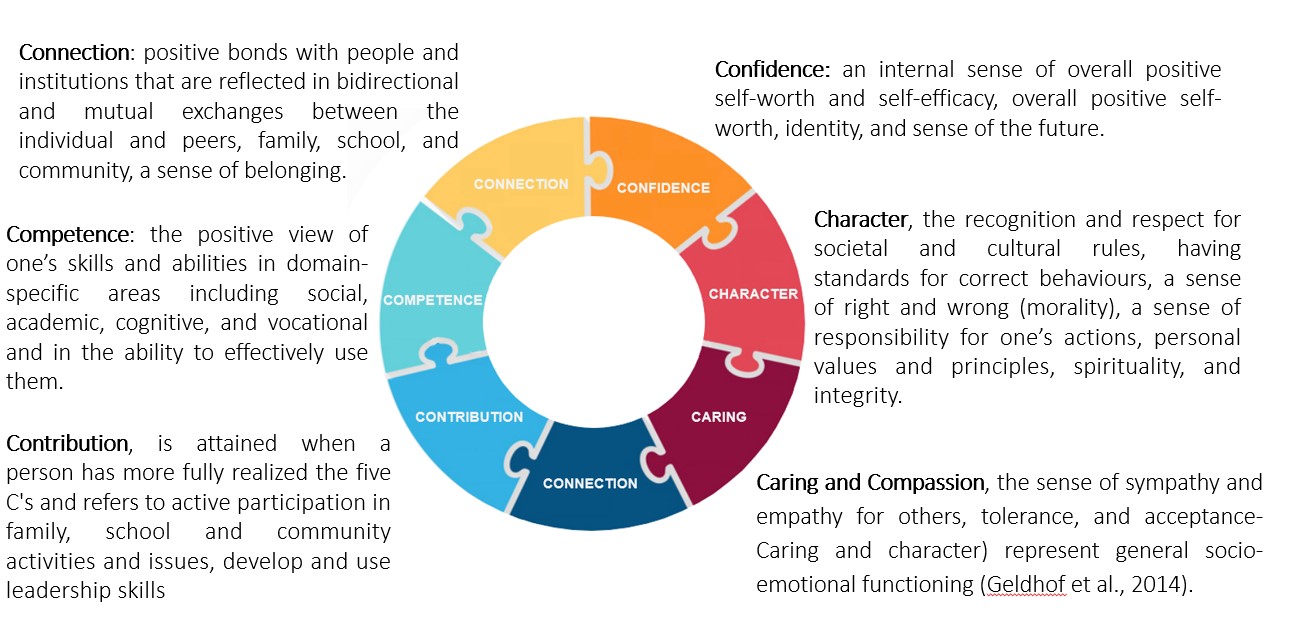
Figure 1. Components of a positive development (Learner, 2007)
Despite operational definitions of PYD’s key constructs vary (Lerner et al., 2009), they share a common focus on building young people’s positive personal competencies, social skills, and attitudes (i.e., asset development) through increased positive relationships, social supports, and opportunities that strengthen assets and help youth flourish within their environments.
According to the PYD perspective, when there is alignment between individual strengths and ecological assets that promote healthy development, the Five Cs positively evolve across the course of an individual’s development. Additionally, when these 5C are expressed in synergy, individuals are more likely to develop trajectories to contribute to the growth of family, community, and civil society.

4. Research Studies and Actions
 Studies
on PYD conducted by Lerner, Phelps and colleagues provide supporting evidence
to this model (Lerner et al., 2005; Phelps et al., 2007, 2009): Preadolescents
who showed high levels of PYD over time also showed poor outsourcing and
insourcing behaviours; those who showed a decrease in the PYD levels were more
likely to manifest more negative behaviours.
Studies
on PYD conducted by Lerner, Phelps and colleagues provide supporting evidence
to this model (Lerner et al., 2005; Phelps et al., 2007, 2009): Preadolescents
who showed high levels of PYD over time also showed poor outsourcing and
insourcing behaviours; those who showed a decrease in the PYD levels were more
likely to manifest more negative behaviours.
In addition, longitudinal data have shown that those who increased their PYD levels were more likely to manifest initially high internalization behaviours that decreased over time and maintained a low externalizing behaviour level. Additionally, Schmid and colleagues’ work (2011) suggest that attitudes toward the future are important in the development of positive outcomes. Hopeful future, for instance, seems to be a strong predictor of higher PYD scores and membership in the most favourable trajectories.
These results suggest that promoting PYD requires to focus on enhancing young people’s strengths, establishing engaging and supportive contexts, and providing opportunities for bidirectional, constructive person-context interactions (Larson, 2000; Lerner, Phelps, Forman, & Bowers, 2009; Snyder & Flay, 2012). Interventions that are grounded in the PYD framework, therefore, must move beyond a problem-oriented focus and address protective and risk factors across family, peer, school, and community environments that affect the successful completion of youths’ developmental tasks (Catalano, Berglund, Ryan, Lonczak, & Hawkins, 2002)
The relevance of working with the context is testified by a systematic review of 25 PYD program evaluations that show PYD interventions operating in family, school, and community settings are effective in promoting positive development in a broad range of outcome domains (Catalano et al., 2002). For example, the authors found that PYD interventions were successful in improving young people’s self-control, interpersonal skills, problem solving, the quality of their peer and adult relationships, commitment to schooling, and academic achievement.
Although these examples of asset development are the key outcomes of interest for PYD, some interventions have also decreased substance use, risk taking, and problem behaviours. PYD interventions, therefore, appear to foster positive outcomes and be able to protect against negative ones.
A variety of specific intervention strategies are compatible with the broad asset development and environmental enhancement orientation of PYD, such as service learning, mental health promotion, and social and emotional learning (SEL; Catalano et al., 2002; Tolan, Ross, Arkin, Godine, & Clark, 2016).
Like the goals of PYD, school based SEL involves implementing practices and policies that help students and adults acquire and apply knowledge, skills, and attitudes that enhance personal development, social relationships, ethical behaviours, and effective, productive work (Elias et al., 2015; Greenberg et al., 2003; Weissberg & O’Brien, 2004).
5. Our lenses: progressing in building a positive future
 PYD studies have added both to our understanding of processes, the
scope of change, and developmental benefits that intervention studies can make
on young people’s lives (Darling-Hammond, Flook, Cook-Harvey, Barron, &
Osher, 2020; Wiium & Dimitrova, 2019). Some key points emerge, relevant for
our project:
PYD studies have added both to our understanding of processes, the
scope of change, and developmental benefits that intervention studies can make
on young people’s lives (Darling-Hammond, Flook, Cook-Harvey, Barron, &
Osher, 2020; Wiium & Dimitrova, 2019). Some key points emerge, relevant for
our project:
 Need to focus on earlier
ages
Need to focus on earlier
ages
Previous work has focused on positive changes in adolescence, but the exploration on how PYD approach is showing benefits among younger children (Leman, Smith, Petersen, et al., 2017; Lerner, 2017), namely primary school children.
Relevance of an integrative
approach
Recent studies incorporate not only children and youth responses but also their identity and culture, as they emerge in numerous cultural contexts (Wiium & Dimitrova, 2019). A challenge, within this broader perspective, is then to achieve a consolidation and integration of approaches to produce and drive growth in different contexts.
Attention to building the
future
Adults of the future are expected to increasingly rely on their own internal resources and social networks to enter the larger societal systems, including work contexts. It is mandatory to act to support development of relevant attitudes and competencies during childhood, and during age range referring to primary education (Darling-Hammond, et al., 2020).